
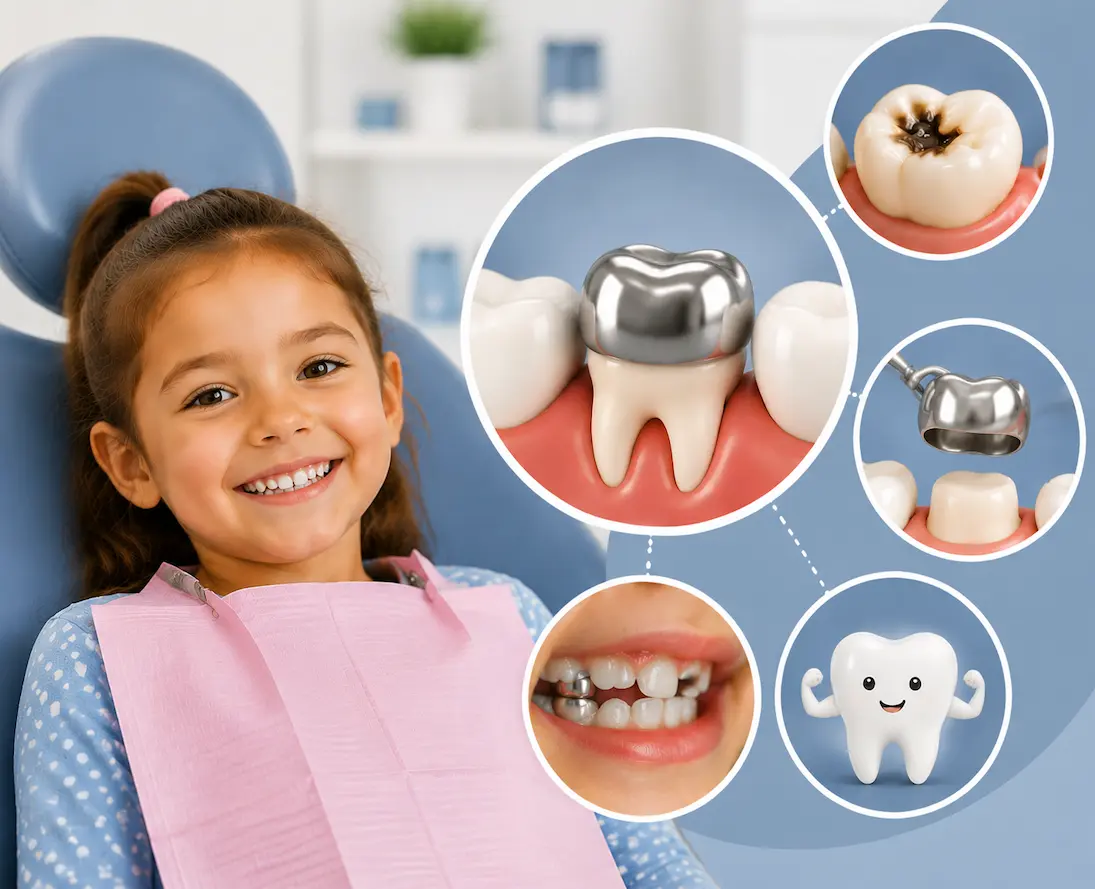
Crown on Baby Tooth: Why It May Be Needed Before Falling Out
A dentist has recommended a crown on a baby tooth, and you may wonder why a tooth that will fall out needs repair. A crown may protect a tooth that is too weak for a filling but still needs to support chewing, spacing, and comfort.
This guide explains when a pediatric dental crown may be needed, how it compares with other choices, and what parents can expect.
What Is a Crown on a Baby Tooth?
A crown is a fitted cap covering the visible part of a damaged tooth. A filling repairs one area, while a crown surrounds the tooth for wider protection.
“Crown” and “cap” mean the same thing. The crown usually remains until the baby tooth falls out naturally.
Why Crown a Baby Tooth?
Baby teeth help children chew, speak clearly, and hold space for adult teeth. A back baby tooth in a four-year-old may still be needed for several years.
Losing it early may allow nearby teeth to shift. Damage can also lead to pain, difficult eating, or repeated repairs. A crown gives the weakened tooth stronger coverage until it is ready to fall out.
When Does a Baby Tooth Need a Crown?
The Cavity Is Too Large for a Filling
A small damaged area may suit pediatric dental fillings. When too little strong tooth remains, a large filling may loosen or break during chewing.
The Tooth Is Broken or Very Weak
A fall, crack, hard bite, or naturally weak surface may leave the tooth unable to hold a filling. Full coverage can offer better support.
The Tooth Needed Deeper Treatment
When damage reaches deep inside the tooth, the outside may need extra protection afterward. A crown covers the weakened tooth so the child can continue using it.
A Previous Filling Keeps Breaking
Replacing the same filling may not solve the problem if the tooth cannot hold it. A crown may also be needed without pain because damage can grow quietly.
Baby Tooth Crown, Filling, or Removal?
The right choice depends on the strong tooth remaining, the child’s age, the tooth’s location, and how long it should stay.
Explore pediatric restorative dentistry to learn how a damaged baby tooth may be repaired and protected before removal is considered.
Dr. Luke helps parents compare choices by explaining the tooth’s condition, the risks of waiting, and which option may last better.
Why Are Silver Baby Tooth Crowns Common?
A silver crown on a baby tooth is often used on back teeth because it is strong, covers the whole tooth, and handles chewing well. Stainless steel crowns may be considered when a large filling is unlikely to offer enough support.
Zirconia crowns are white and may suit visible areas. The choice depends on position, fit, strength, appearance, cost, and the child’s needs.
The American Academy of Pediatric Dentistry guidance explains that treatment choices should reflect the tooth, available evidence, and each child’s situation.
Will the Baby Tooth Crown Fall Out?
Usually, yes. The crown stays attached and comes out with the baby tooth when it naturally falls out. It does not normally block the adult tooth.
Call the dentist if it loosens early. Do not pull it or use household glue.
What Happens During a Pediatric Crown Visit?
The dentist checks the tooth and may take an X-ray. The area is made numb, the damaged part is cleaned away, and the tooth is shaped so the cap fits.
After placing the crown, the dentist checks the bite. Dr. Luke explains the steps in child-friendly words and guides parents through the plan before treatment.
How Do You Care for a Baby Tooth Crown?
Watch your child until numbness fades so they do not bite their cheek or lip. Help them brush twice daily and clean beside the crowned tooth as directed.
Call if the crown loosens, falls off, causes lasting pain, changes the bite, or has swelling nearby. Sudden pain or swelling may need pediatric emergency dental care.
What Should Parents Ask About Baby Tooth Crowns?
Ask why a crown is better than a filling, how long the tooth should remain, what could happen if you wait, and whether silver or white is more suitable.
When several crowns are recommended, ask the dentist to explain each tooth separately. Clear answers should help you understand the plan without feeling rushed.
Protect the Baby Tooth at the Right Time
A crown on a baby tooth protects a tooth that still supports chewing, spacing, and comfort. Ask why a crown is preferred, how long the tooth should remain, and which alternatives make sense for your child.
Why Choose Dunwoody Pediatric Dentistry?
Dunwoody Pediatric Dentistry helps families understand why a crown is recommended and which alternatives may fit. Dr. Luke carefully evaluates the tooth, explains silver and white crown options in plain language, and guides parents through next steps while helping children feel comfortable, informed, supported, and prepared throughout their entire visit.
Baby Tooth Crown FAQs
Does a Baby Tooth Need a Crown If It Does Not Hurt?
Yes, it may. Pain is not the only sign that a tooth needs protection. A large cavity, crack, or weak tooth may worsen quietly. The dentist uses the exam and X-ray to judge whether a filling can hold or a crown offers stronger coverage.
Does Getting a Crown Hurt a Child?
The tooth and nearby area are numbed before work begins. A child may notice pressure or vibration but should not feel sharp pain. Mild soreness afterward can happen. Contact the dentist if pain grows, lasts, or stops the child from eating.
How Long Does a Baby Tooth Crown Last?
A baby tooth crown is usually meant to last until the tooth becomes loose and falls out naturally. Its lifespan depends on fit, chewing habits, daily cleaning, and how soon the tooth is due to leave. Regular visits help check that it remains secure.
Is a Silver Crown on a Baby Tooth Safe?
Silver stainless steel crowns are widely used for damaged baby back teeth. Tell the dentist about known metal allergies and ask which material is planned. The choice should consider safety, location, strength, appearance, and your child’s needs.
What Should I Do If My Child’s Crown Falls Off?
Keep the crown if you can, stop your child from chewing on that side, and contact the dentist promptly. Do not use household glue. Seek faster help if there is pain, swelling, bleeding, or a sharp tooth edge that could injure the mouth.
FaQ's
Frequently Asked Questions
Related Posts

Cavities Without Drilling: Which Children May Be Candidates?

Stainless Steel vs Zirconia Crowns: What Parents Should Know
Crown on Baby Tooth: Why It May Be Needed Before Falling Out
