
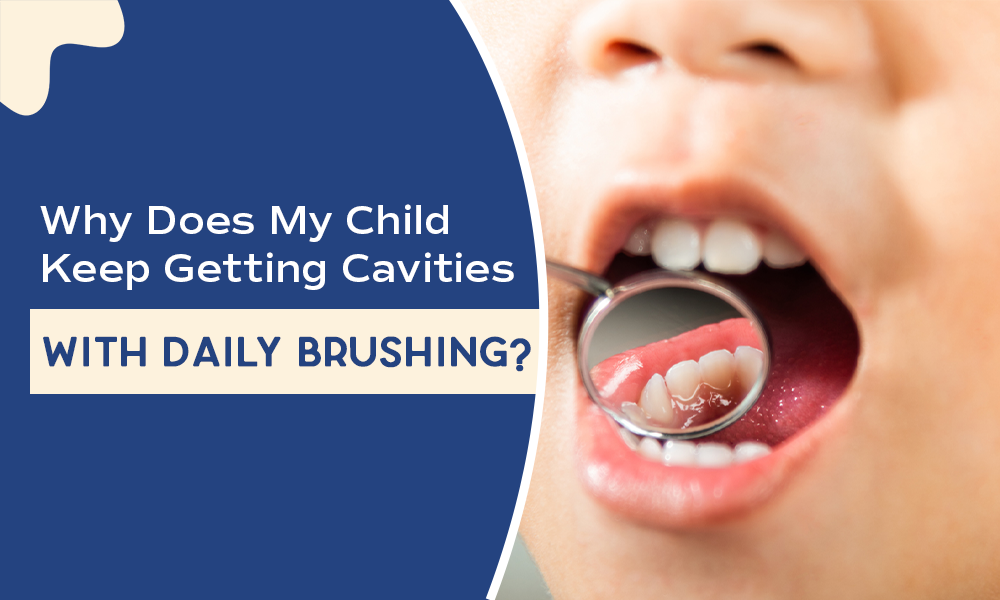
Why Does My Child Keep Getting Cavities With Daily Brushing
You supervise brushing, limit candy, and still hear that your child has another cavity. If you are asking, “why does my child keep getting cavities,” the answer is usually not a lack of effort. Daily brushing matters, but it cannot reach every tooth surface or cancel out frequent snacks, sweet drinks, dry mouth, and hard-to-clean teeth.
Why Does My Child Keep Getting Cavities?
A cavity begins when germs and leftover food repeatedly weaken one area of a tooth. Brushing removes much of the sticky buildup, but it may miss tight spaces, deep grooves, and back teeth.
Children may also eat or sip so often that their teeth get little recovery time. Usually, a child keeps getting cavities because several small risks are happening together, not because of one major mistake.
Seven Hidden Causes Of Child Cavities
Brushing Misses Important Tooth Surfaces
Brushing twice a day does not mean every tooth is cleaned well. Children often brush the visible front teeth, rush past the back teeth, or stop too soon.
Watch one full session. Check the inside, outside, and chewing surface of every tooth. Younger children may still need a parent to finish, even when they brush independently.
Food Stays Between Touching Teeth
A toothbrush cannot fully clean narrow spaces between teeth that touch. This is why some children develop cavities between teeth despite regular brushing.
Clean these spaces once a day, preferably before bedtime. Child-friendly flossers can help. Ask the dental team to demonstrate when an area is difficult to reach.
Frequent Snacks Keep Teeth Under Pressure
How often a child eats can matter as much as what they eat. Compare a cookie served with lunch to crackers eaten slowly for two hours. The second habit exposes teeth again and again.
Set clear meal and snack times. Between them, offer water instead of juice, sports drinks, flavored milk, or repeated bites of food.
Healthy Foods Can Still Stick
Candy is not the only concern. Crackers, pretzels, dried fruit, fruit snacks, granola bars, sweetened yogurt, and fruit pouches can cling to teeth or break down into sugars.
Serve them with meals instead of allowing all-day grazing, add water afterward, and avoid sticky snacks after nighttime brushing.
Back Teeth Have Deep Grooves
Back teeth often have narrow grooves where food settles. A toothbrush may pass over the top without reaching the deepest spots.
Some teeth need added protection. Dental sealants cover these grooves with a thin layer that helps keep food out.
Dry Mouth Reduces Natural Protection
The mouth’s natural moisture helps wash away food and protect teeth. Low water intake, mouth breathing, snoring, or certain medicines can leave a child’s mouth drier.
Notice dry lips in the morning, nighttime thirst, or sleeping with an open mouth. Share these patterns during the dental visit.
Some Children Need Extra Protection
Children in the same family can follow similar routines and have different cavity experiences. Tooth shape, family history, past cavities, tooth strength, and fluoride exposure can affect risk.
Recurring cavities are not unavoidable. Prevention simply needs to match the child rather than using the same routine for everyone.
Cavity Location Reveals Useful Clues
Cavities between teeth may point to missing daily flossing. Cavities on chewing surfaces can be linked with deep grooves. Spots near the gums may suggest rushed brushing, while upper front-tooth cavities can be connected with bedtime bottles or sweet drinks.
These are clues, not final answers. Dr. Luke can review the pattern and help parents focus on the habits or tooth areas needing the most attention.
Reduce Recurring Cavities
Watch One Complete Brushing Session
Use a timer and check the back teeth, inside surfaces, and gumline. Let your child start, then finish missed areas.
Add At Night Cleaning Between Teeth
Clean between every pair of touching teeth. Doing this at night removes food before it remains there for hours.
Change Snack Timing
Replace constant grazing with planned meals and snacks. Offer water between them.
Check The Brush And Toothpaste
Use a small, soft brush and the correct amount of fluoride toothpaste for your child’s age. The American Academy of Pediatric Dentistry’s parent guidance explains brushing and toothpaste amounts simply.
An electric brush may help with timing and movement, but it must still reach every surface. It does not replace flossing or supervision.
Ask About Added Protection
Through preventive dentistry, Dr. Luke can show families where brushing is being missed and discuss fluoride or sealants. If a tooth already has a cavity, dental fillings can repair it before the damage grows.
When Repeated Cavities Need A Closer Look
Schedule a dental visit when cavities continue after home changes, several appear quickly, or the same areas keep being affected. White or brown spots, pain, dry mouth, mouth breathing, and brushing difficulties also need attention.
The goal is not only to repair each cavity. It is to find the pattern and lower the chance of another one.
Stop The Cavity Cycle
Daily brushing is essential, but recurring cavities need a wider look. Watch how your child brushes, clean between touching teeth, review snack and drink timing, and note where cavities appear. Then ask the dentist which risk matters most and what practical change should come first.
Why Choose Dunwoody Pediatric Dentistry?
At Dunwoody Pediatric Dentistry, Dr. Luke helps families understand why cavities keep returning instead of offering one-size-fits-all advice. He reviews brushing, flossing, snack timing, tooth shape, and cavity location, then explains practical next steps. Our child-focused team supports parents with clear guidance, prevention, and comfortable, age-appropriate care for every child.
FaQ's
Frequently Asked Questions
Related Posts
Why Does My Child Keep Getting Cavities With Daily Brushing
Cavities Without Drilling: Which Children May Be Candidates?

Stainless Steel vs Zirconia Crowns: What Parents Should Know
